by Margie O’Rourke, AIWC Dublin and Talia Southgate, AIWC Frankfurt
Sharing her perspective on risks and limitations, American businesswoman and executive Marissa Mayer said, “I think that the glass ceiling is not really about women or men, it’s about people that take risks and people that don’t.”
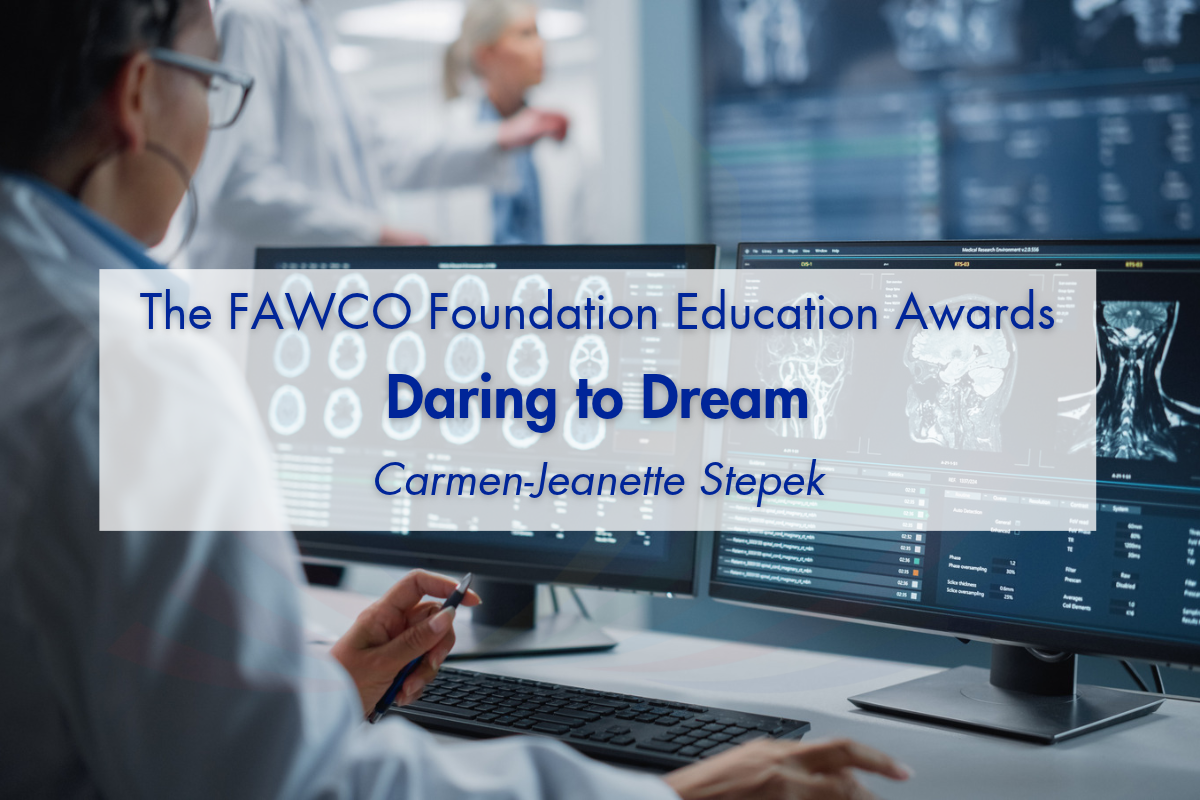
Dr. Carmen-Jeanette Stepek, a FAWCO Education Awards Recipient, is, undoubtedly, a risk taker. She spent her childhood in Northern California and in Minnesota, completed her PhD in Dublin, Ireland, and is currently living and researching in Warsaw, Poland. Driven by a fascination with human health, she studied applied physics and mathematics during undergrad. As her concern grew in regards to feeling disconnected from the people she hoped to support, she sought a path offering more direct interpersonal connection and impact. Driven to improve human wellbeing, Carmen applied to doctoral programs across the health and disease spectrum in order to bridge math-intensive physical sciences with biology.
Carmen’s PhD studies focused on neurodegenerative disorders, including Alzheimer’s and Parkinson's. During this time, she had the opportunity to hear from and engage with patients with Parkinson's, as well as their families and caretakers. These experiences further motivated Carmen to pursue work with significant interpersonal impact and influenced her to become more involved with the humanistic side of science. Ultimately, she dreams of finding ways to merge science with policy.
Carmen began her PhD program in Dublin, Ireland at the start of the COVID pandemic. Relocating to another country amidst an international lockdown was “daunting”, and she quickly recognized the need for a community. She joined the American Women’s Club of Dublin (AWCD), and it became one of the “most enriching parts” of her time in Dublin. Her gratitude towards the women who welcomed her with open arms is evident in her tone as she talks about the club and its members. “It offered an incredible, multi-generational network of inspiring women who provided genuine community, mentorship, and steady encouragement throughout my degree.”
It was during this time that she became aware of the Education Awards that are available to members who meet the various criteria. Carmen applied for the Study Degrees award twice - first in 2021 and again in 2022 and was granted the award the second time. The Study Degree Award can be used towards high school, undergraduate and graduate programs, as well as skills enhancements.
Interestingly enough, Carmen was presenting at the Bratislava FAWCO Conference in 2022, and, as a result, received the award in-person, noting how meaningful this moment was for her - professionally and personally. Carmen was able to travel to The German Center for Neurodegenerative Diseases in Bonn, Germany and engage with American International Women’s Club (AIWC) Cologne while attending the UN Climate Change Conference intersession. In addition, she participated in academic conferences in France and Portugal. The financial assistance of the FAWCO Award went a long way in relieving her of accruing additional debt, as well as providing her with a computer that enabled her to take her research on the road.
After completing her PhD in 2025, Carmen began a post-doctoral research position at the Masonic Institute on the Biology of Aging and Metabolism at the University of Minnesota. Her research, which she is completing in Poland, currently focuses on systemic aging and cellular senescence. Carmen is working towards becoming a biomedical scientist and utilizing systems medicine in the development of holistic health and the understanding of pathways associated with neurological disorders and neurodegeneration. To sum it up, Carmen believes she “will never be done learning” because knowledge cultivates transformation.
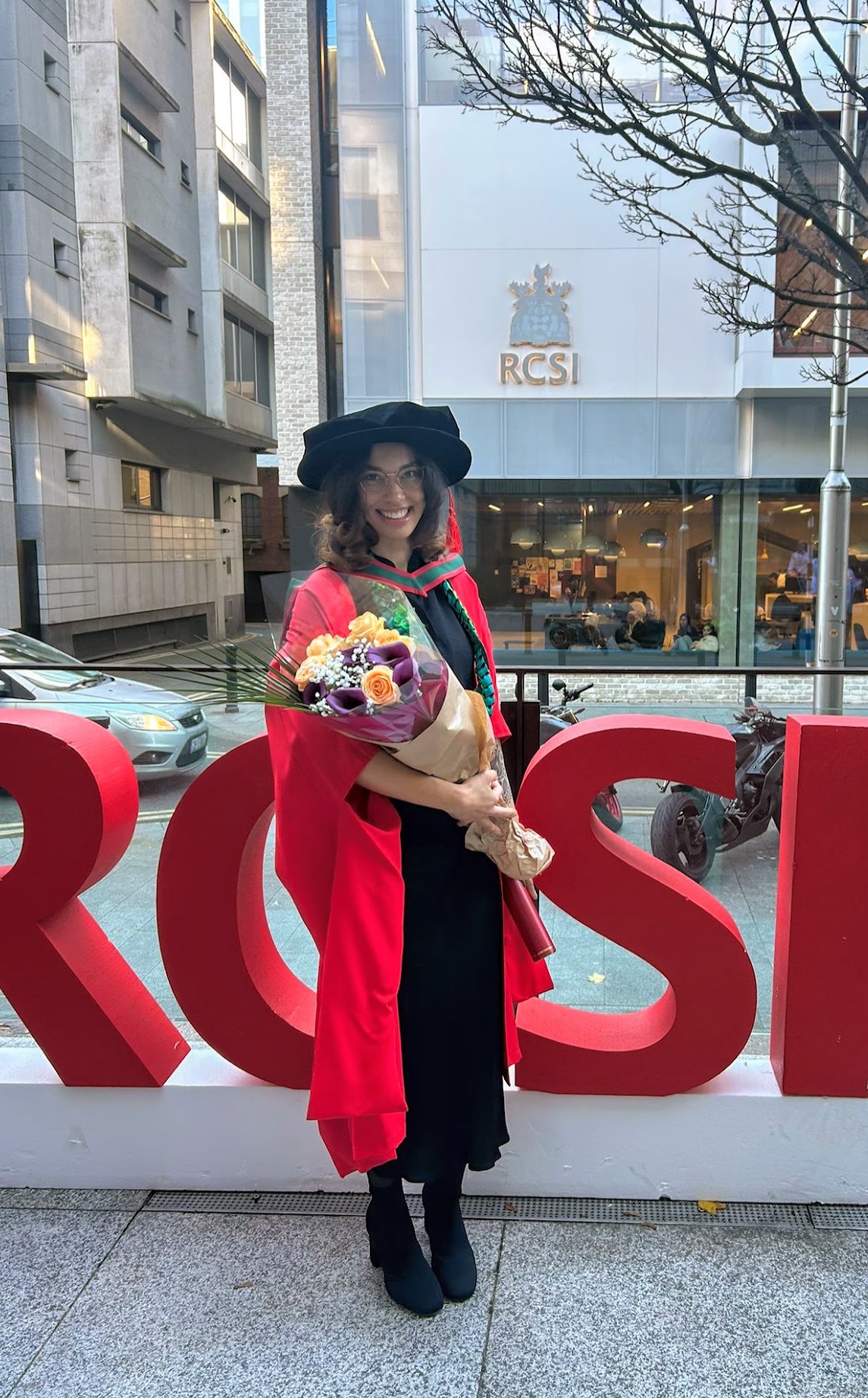
Photo Credit: Photo provided by Carmen Stepek
For Carmen, receiving a FAWCO Education Award was about much more than financial assistance. It gave her something that can be just as valuable during the demanding years of higher education: freedom, confidence and the ability to keep moving forward without being weighed down by financial worry. As a PhD student, Carmen knows all too well how financially challenging that stage of life can be. “You don’t have a lot of money,” she says, describing the financial pressures of doctoral study. The Education Award brought enormous relief by helping her avoid accumulating a significant amount of debt.
The award also provided her with something very practical that has had a lasting professional impact: a laptop. For Carmen, this represented technological freedom. Her research now travels with her, allowing her to analyse data wherever she happens to be—at home, at a conference or on the move. This flexibility has helped her build an important bridge between computational analysis and her broader scientific interests, ultimately helping to shape the direction of her career.
But Carmen’s journey has never been one she has travelled alone. Family has always been at the heart of her story. She describes her parents and siblings as some of her greatest pillars of strength, along with close friends and her PhD supervisor, who helped her discover confidence in herself as a researcher.
Carmen has always wanted to make her parents proud, as both came from humble beginnings and believed deeply in the transformative power of education and opportunity. They sacrificed enormously to give their family opportunities that they themselves had not had. Carmen’s mother grew up in Detroit during the 1960s and 70s; while the city was a vibrant epicenter for the civil rights movement and cultural revolution, it also faced socioeconomic hardship. Her father was born just after World War II in Tarnów, Poland—a neighboring town linked by rail and history to Auschwitz. Both family histories carry profound generational resilience and trauma. Today, her Black American roots and Polish heritage are foundational pillars of who Carmen is and how she moves through the world.
In addition to her parents, her siblings have been her “constant cheerleaders”. Carmen recalled a particularly touching example of that support. On April 15, 2023, her sister Lala wrote a passage for her reflecting on the impact Carmen would have in the years ahead. It was inspired by a collection of articles published in the New York Times, entitled ‘Women Making History’ over the past century. For Carmen, the message was a meaningful reminder that her work could have a powerful impact far beyond what even she can imagine.
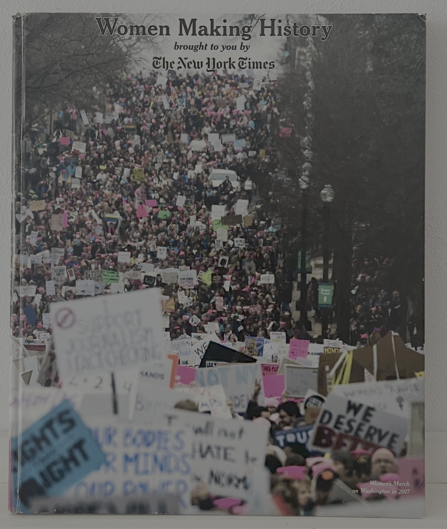
Photo Credit: Photo provided by Carmen Stepek
Today, Carmen is continuing to explore where her education and curiosity might take her next. One of her personal goals is to reconnect more deeply with her Polish heritage by learning the Polish language. She takes Polish lessons three times a week and has found a wonderfully creative way to practise: she buys Polish poetry books and translates them herself. She even takes yoga classes taught in Polish! Learning the language is particularly meaningful to Carmen because some members of her family do not speak English. For her, learning the language is therefore not simply an academic exercise—it is a way of strengthening her connection with her heritage and her family.
Scientifically, Carmen is also exploring fascinating territory. She is interested in whole-body ageing and the nervous system, particularly the relationship between the brain and the peripheral nervous system and how the body responds to stress and “fight or flight” signals.
One area that particularly fascinates her is the heart’s intrinsic nervous system. Sometimes described as a kind of “mini brain” within the heart, it contains a remarkable number of neurons and remains an understudied area of science. Carmen is intrigued by the possibility that understanding this system could help reshape how we think about medicine and the human body—not as a collection of separate parts, but as one interconnected system.
There is also a fascinating historical dimension to her interest. For centuries, the heart was regarded as the body’s ruling centre, rather than the brain. We still use the language of the heart when we talk about emotion, love and our deepest attachments. Carmen sees exciting possibilities in bringing together this scientific understanding with her dedication to yoga, in regards to how we might influence our bodies and wellbeing without relying solely on drugs.
“As a neuroscientist studying aging and the nervous system, teaching and practicing yoga deeply reinforces my conviction that embodied awareness and nervous system regulation are essential, evidence-informed complements to clinical medicine.” Looking ahead, she hopes to expand her outreach and explore the intersection of science, global health policy and social impact. Her goal is to help bridge learning and science with meaningful change in the world.
And FAWCO will continue to be part of that journey. Although there is currently no FAWCO club in Poland, Carmen remains connected to the organisation and values the community it provides. When asked what advice she would offer future Education Award recipients, Carmen’s message is wonderfully simple: keep moving towards your goal.
“I don’t know what background FAWCO award applicants are coming from,” she says, “but even when the path feels improbable, completely unfamiliar or lonely, keep going.” For someone who admits to being a natural overthinker, Carmen has developed a mantra that helps her stay grounded: focus on the very next action or the very next step.
Rather than becoming overwhelmed by everything that might happen in the future—or by things that have already happened—she tries to concentrate on the next step and take it from there. She also encourages others to lean on their communities and the people around them. Perhaps it is this combination of curiosity, determination, family support and a willingness to simply take a risk that best captures Carmen’s approach to life.
And if she could sit down for coffee with an influential woman, her first choice is Marie Curie. Carmen admires Curie not only as an extraordinary scientist, but as a Polish woman who moved across borders and pushed forward in the name of science and for the benefit of humanity. She is particularly conscious that Poland has produced many remarkable women whose contributions have been lost or overlooked in history. To Carmen, Marie Curie remains the face of pioneering female research.
But her coffee list would not end there, Michelle Obama would be next due to her strength, influence and understanding of policy—and Carmen says she would be the first person she would turn to for advice. And then there is Shakira: a woman who is “super powerful and fun and amazing.”
It seems fitting that Carmen’s choices reflect so many aspects of her own journey—scientific curiosity, social impact, strength, heritage and, importantly, a sense of joy. Her story is a reminder of exactly what education can make possible. Sometimes an award provides financial help. Sometimes it provides the practical tools needed to keep going. And sometimes, perhaps most importantly, it gives someone the confidence to follow a path that once seemed improbable.
For Carmen, the journey, the risk taking, the glass shattering and the dreaming continue — one step at a time.
Explore Education Awards
Carmen received the Shirley Kearney University Study Degree Award in 2023. Learn more about this award and explore the full range of FAWCO Foundation Education Awards.